

The EU clean transition
The clean transition connects the EU's objective of climate neutrality by 2050 with its competitiveness, resilience and strategic autonomy. The JRC tracks progress towards the EU's clean transition targets and analyses what is needed to accelerate implementation.

What is the clean transition?
The shift towards a climate-neutral, resource-efficient and pollution-free economy. Launched under the European Green Deal (2019 to 2024), it is now a pillar of the Commission's 2024 to 2029 agenda and of the Competitiveness Compass, which links decarbonisation with closing the innovation gap and reducing excessive dependencies.
The JRC analysis covers 154 targets in seven thematic areas: climate action; clean, affordable and secure energy; circular economy; sustainable and smart mobility; sustainable food systems; biodiversity and ecosystems; zero pollution. It combines an assessment of progress towards these targets with an analysis of the challenges and enablers for delivering them. This section brings together the resulting tool and reports.
Place for a portrait aspect ratio image for the Clean Transition Tracker
Place for a portait aspect ratio image for Competitivenss
Clean Transition Tracker
Search and filter the 154 clean transition targets by thematic area, SDG and legal status. Each entry shows the assessed progress and the source policy document. Based on data available in mid-2024, 32 targets are on track, 64 need acceleration, 15 are not progressing or regressing, and 43 lack sufficient data for assessment.
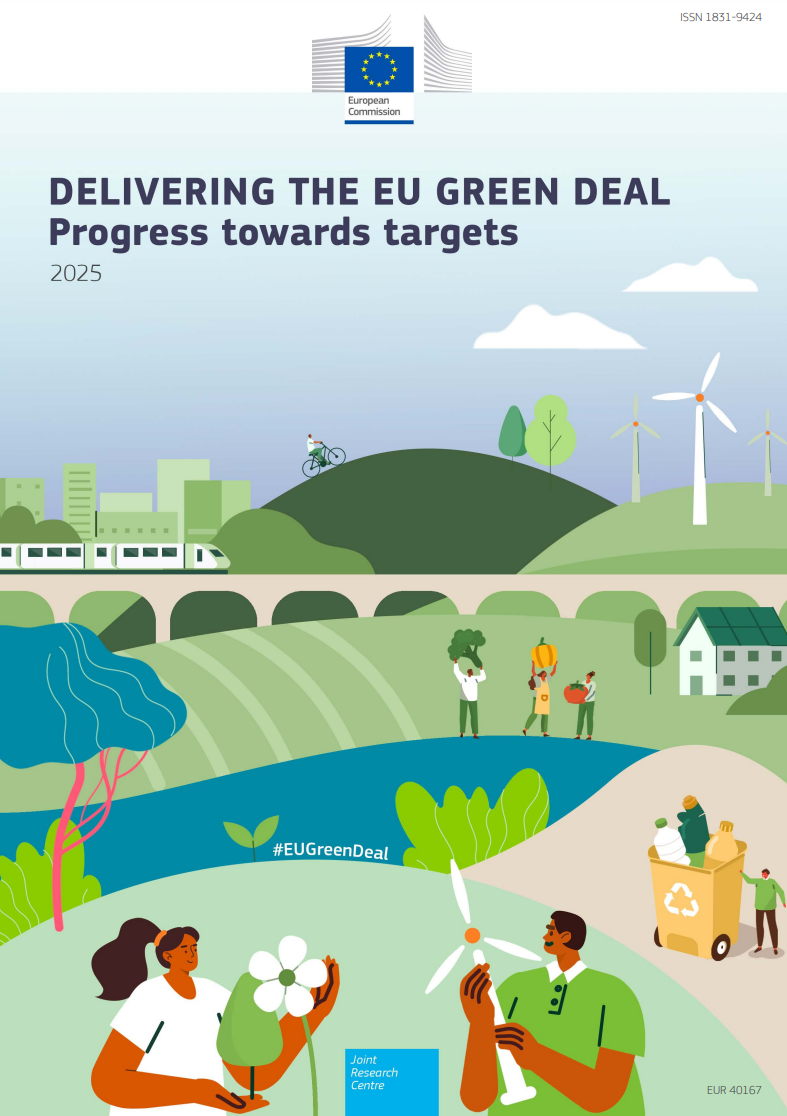
Explore the TrackerDelivering the EU Green Deal: progress towards targets (2025)
JRC distance-to-target assessment of 154 quantifiable targets, legally binding and non-binding, drawn from 44 EU policy documents. The report presents key messages for each of the seven thematic areas, identifies achievements and implementation gaps, and shows how the targets relate to the SDGs.
View report insightsA pathway to Europe's competitiveness: the clean transition (2026)
Building on the progress assessment, the report identifies the challenges that slow implementation and the evidence-informed enablers that can accelerate it. The analysis follows the three Competitiveness Compass pillars: decarbonisation and competitiveness, reducing dependencies and increasing resilience, closing the innovation gap. Horizontal enablers include finance, a fair and just transition, education and skills, governance and policy coherence, and data and monitoring.
View report insights